Canid get enough of canids………
Long hair, fuzzy beard, bright eyed and bushy tailed – and that was just my supervisor glancing at my work!! (I must have done something right) As for the canids they are many and few between! Pointed ears, flopped ears, large heads, small heads, long faces, squashed faces, furry guys and smoooooth guys – so many morphological differences within this one species, Canis lupus familiaris! Wolves on the other hand – all quite similar (see: “Welcome to the Family”) – so what does this mean with regards to domestic dog communication!? We will endeavour to find out!

Yeti the Finnish Lapphund – a ‘wolf-like’ dog, and a very handsome boy! (Photo credit: SD Twiss)
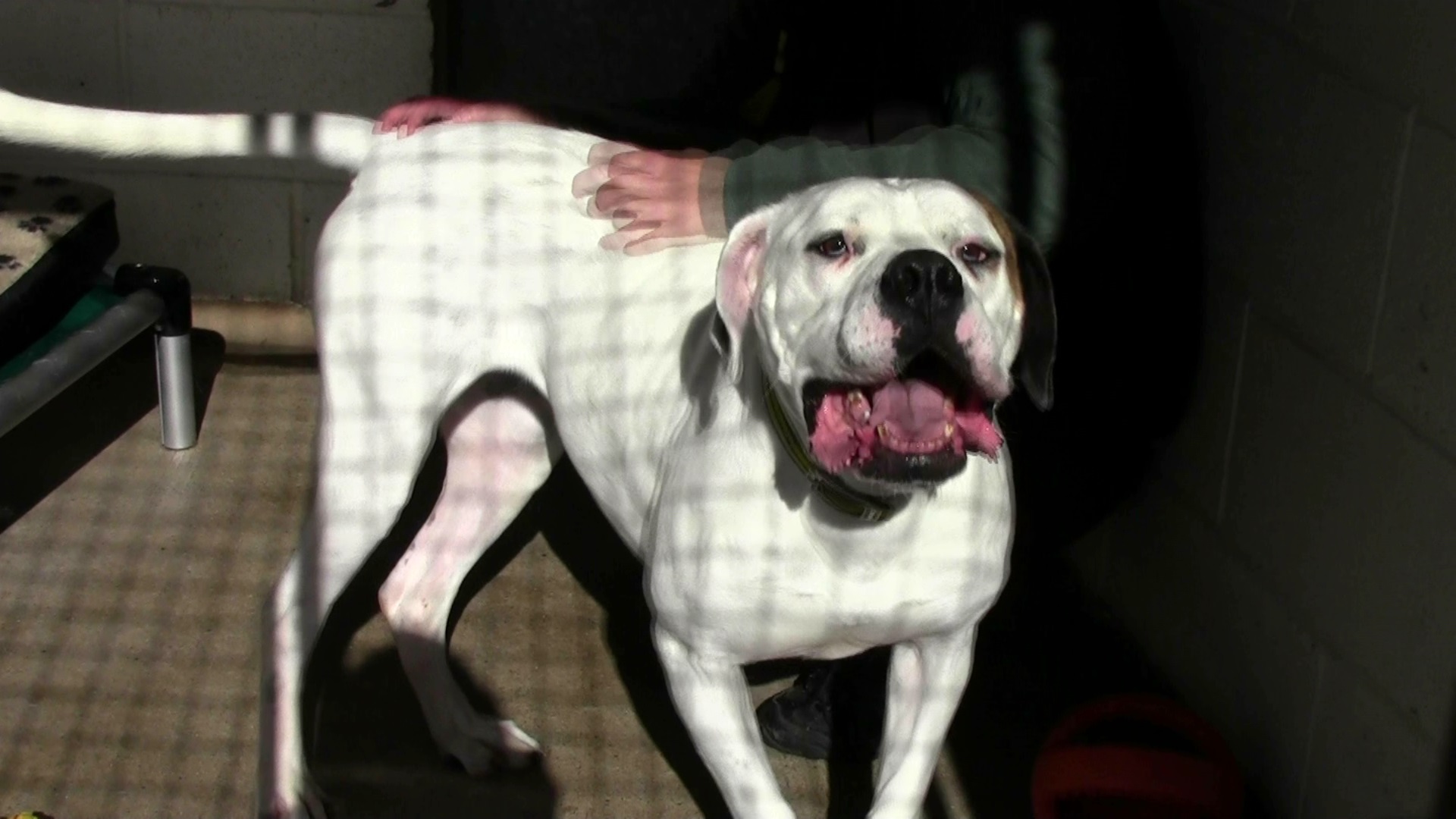
Lottie the American bull dog, one of my research dogs. She is not a wolf-like dog, and to some folk she is simply very scary looking, but she has a heart of gold and loves a cuddle! (Photo credit: ER Hobkirk)
But first, where have I been recently, besides creating my own blog? Well folks, I have been collecting more wolf data!! Which means I have been face to face with our wolves once again – seeing into their eyes, their glorious golden orbs of sensational splendour! (even that was quite an eccentric analogy for me!) Watching them move with grace and glory – observing them interacting, cooperating, communicating (and hunting…!) – being fascinated, intrigued and amazed by them – I absolutely love wolves!!
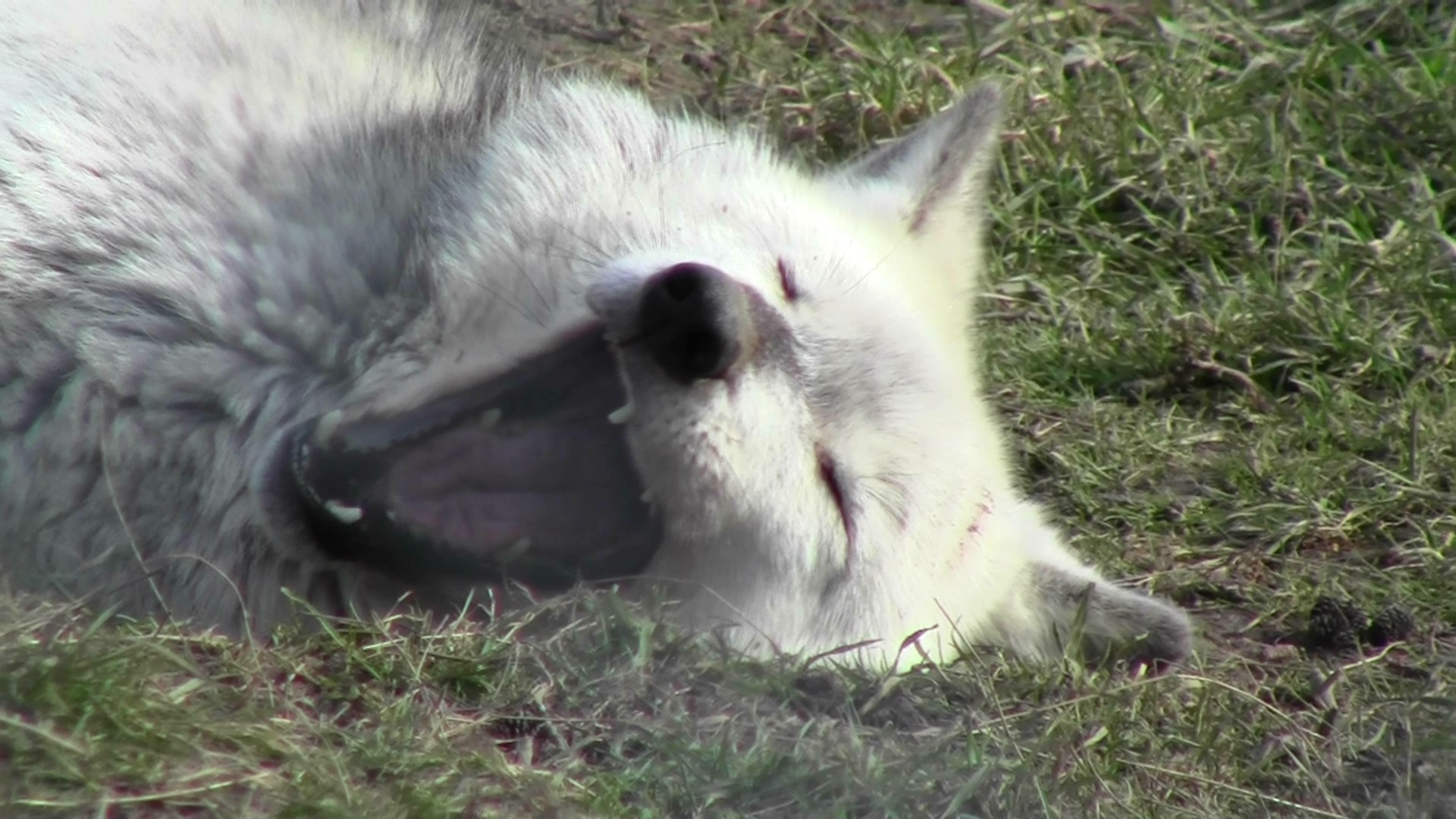
Mai laughing at the researcher in front of her!…..nah, she’s just yawning – which means I just bore her!!?? *Sighing scientist* (Photo credit: ER Hobkirk)

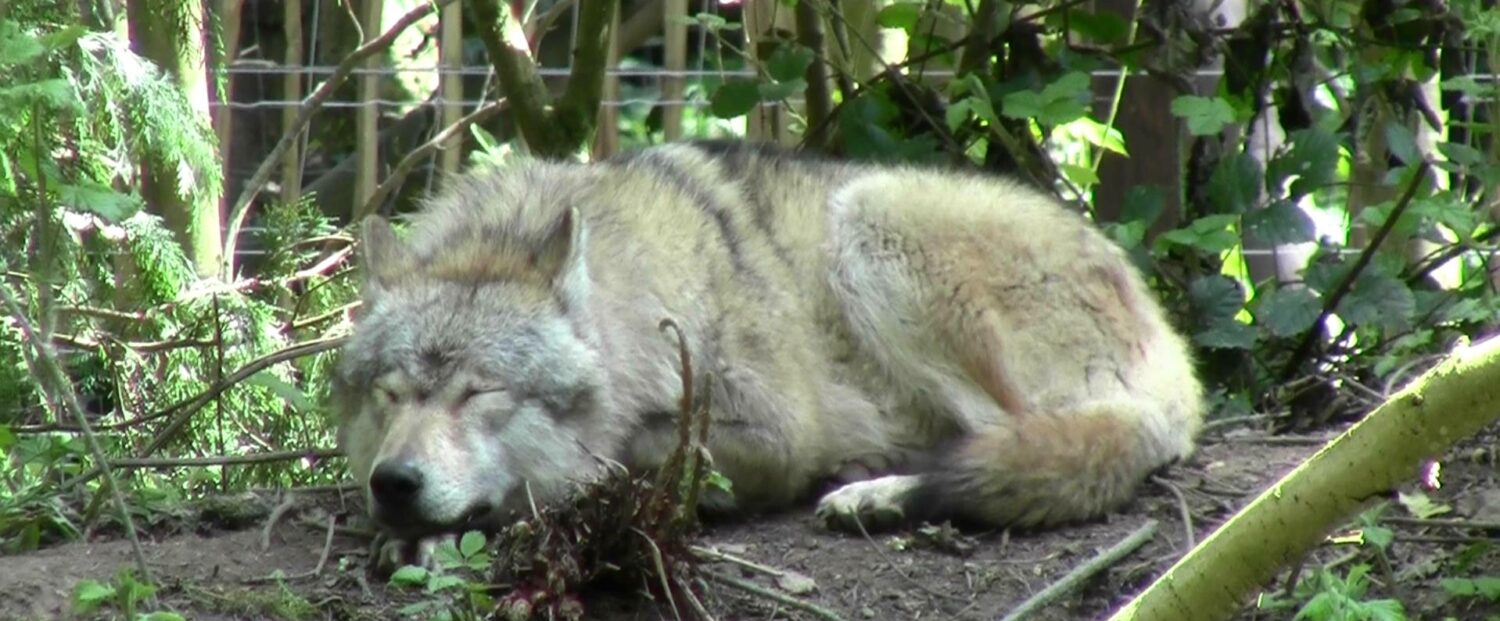
Sikko resting……or is she turning her nose up at me!? *Paranoid scientist* (Photo credit: ER Hobkirk)
First day back at the UK Wolf Conservation Trust (UKWCT), rocking up in the beast of a 4×4 truck I got to claim as my own for my second field season, I was greeted by a rather lean looking Mosi! Why was she so skinny? Had she not been eating enough, was there something wrong?? No, she had simply shed her winter coat since I last saw her – in fact every wolf had shed their winter coat and were sporting their finer furry fleeces! When wolves shed their winter coats they appear to lose weight, with the biggest ‘weight loss’ appearing in the Arctics, who greeted me next! Even Pukak, my yellow eyed, pot-bellied boy was looking rather trim – but still utterly adorable! Still, initial observations led to a wee bit of identity confusion between him and his sister Sikko – as both of them have quite rounded rumps from behind, however Sikko has a more slender, feminine face and is a wee bit shorter in height (always make sure you can identify your individual research subjects, always, and consider seasonal changes!) – while Massak being tall and willowy regardless of season is easily recognised by his robust forehead (quite comical as he reminds me of a teen cartoon I used to watch back in the day – anyone my age and older probably knows which large fore-headed, heavy metal loving fictional character I’m talking about!? If not, hit me a comment below and I shall satiate your curiosity once more!)
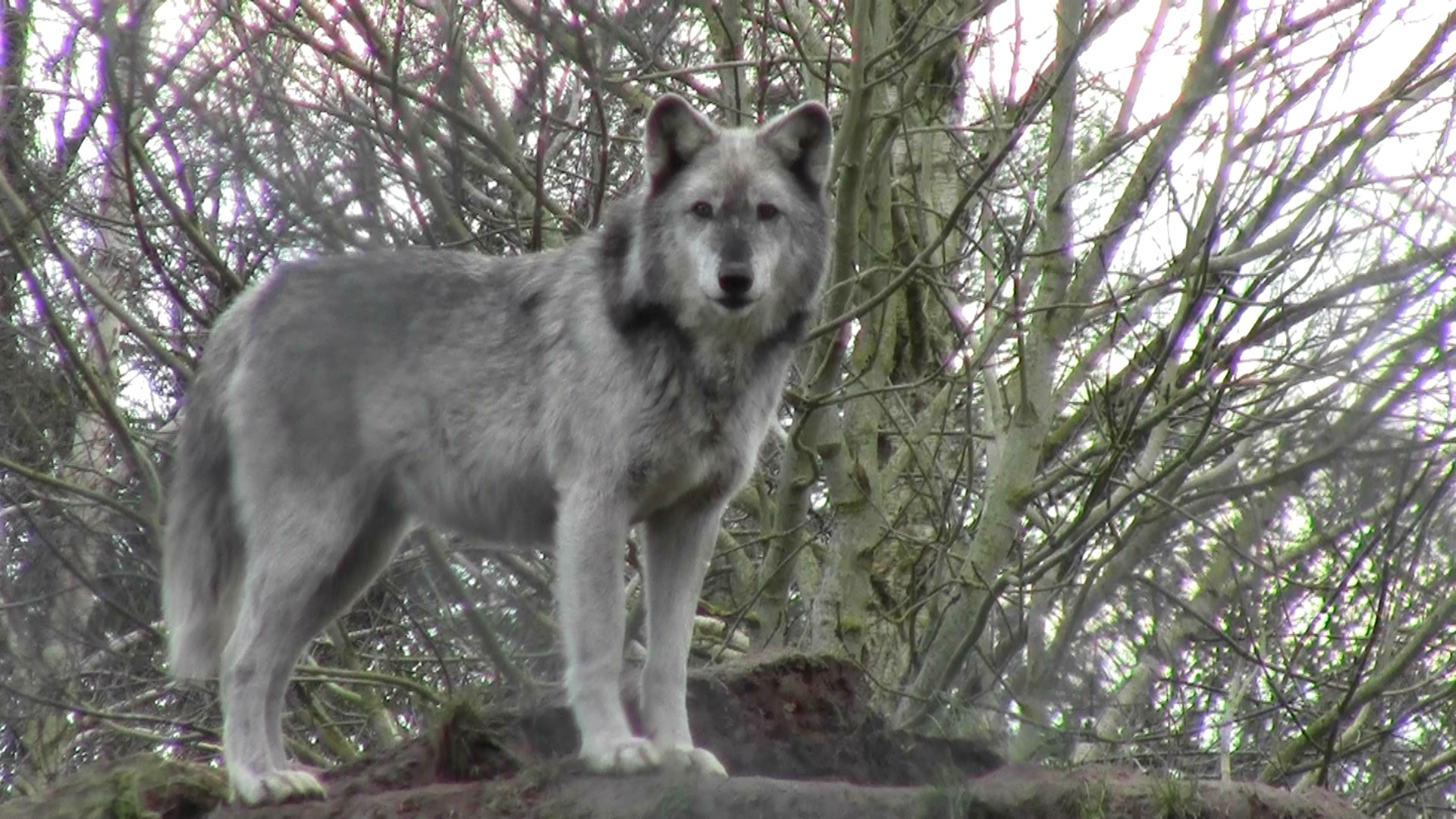
Mosi, in her dense and warm winter coat (Photo credit: ER Hobkirk)
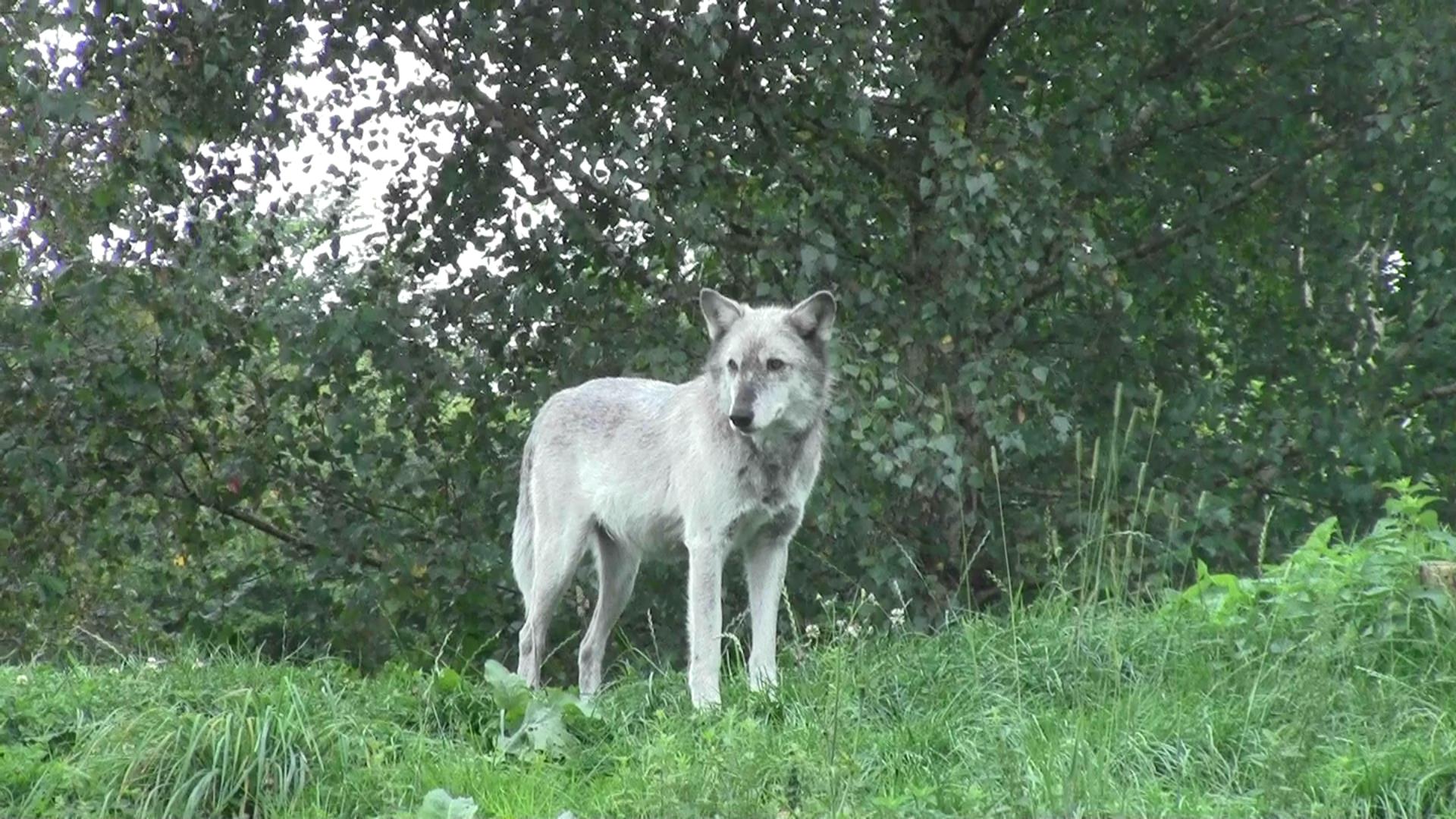
Mosi, sporting her finer summer coat! (Photo credit: ER Hobkirk)
When wolves shed their winter fur it’s quite unlike the majority of dogs – huge chunks of dense undercoat strew out from their bodies – hence they look skinny in the summer – in fact, wolves are not hugely muscular animals as many folk believe – beneath the fur and skin of a wolf resembles something of a Grey hound!! Which, from a biological/evolutionary perspective makes complete sense, as if wolves (North American wolves in particular) were very muscular, very bulky animals, they would have great difficulty in running through deep snow to pursue prey – yes, they would be better equipped (with greater strength) to bring down prey such as Bison (Bison bison), but they would have to exert more energy when chasing down that prey in deep snow – this is not acceptable! So, via evolution (re: natural-selection!) wolves have become more stream-line to allow easy passage throw deep snow (other adaptions to deal with snow include a deep chest, long legs and webbed feet!). Think of Grey seals (Halichoerus grypus) on land vs. in water – Grey seals are huge (approx. 200kg if not more!) and when on land, hauled out, they are quite clumsy, flopping and bounding about like a drunk rocker in a bar, due to their massive bulk and lack of adaptions for life as a strictly terrestrial mammal – in water, the habitat they are adapted to, their bulk is supported and they are stream-line, which allows them to move about majestically, twisting and turning with ease, traversing the deep blue like a Swan Lake ballet dancer traversing the stage at the Royal Opera House! (Quite contrasting).
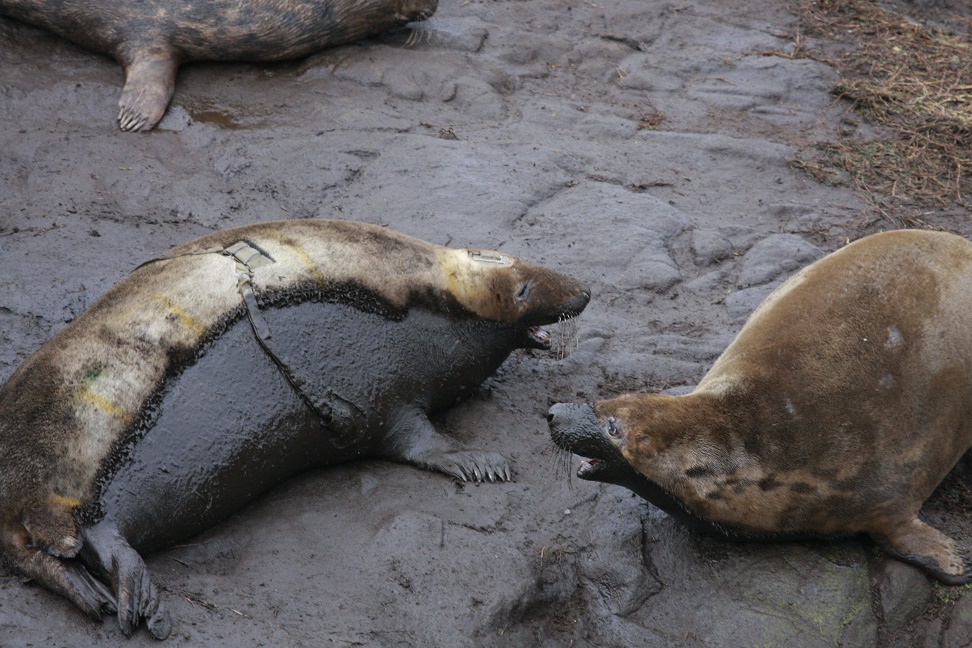
Couple of quite rounded female Grey seals having a bit of argy-bargy (Photo credit: SD Twiss)
Obviously being slim in cold habitats isn’t ideal for conserving heat, so how do wolves solve this issue? Yep, by having long, thick insulating winter fur! (Seals have an insulating, subcutaneous layer of blubber though – long, thick fur in an aquatic environment would just make them less stream-line, thus energy requirements for simple locomotion goes up!) Anyway, point is, size isn’t everything, there are always trade-offs, and animals have specific morphologies for specific reasons – which is the basis of my research – and what I will tell you lovely folk more about here! Peace!!

Elana, scribbling down field notes back in February!
“I canid get enough of canids!”
[…] And ACTION!!!!! So, there I was rolling up in my truck (like something from BJ and the Bear!) to see our wolfy comrades once again – armed with cameras, notebook and a whole lotta lovin’ for wolves! As soon as our wolves hear the rumble of an engine in the distance they come-a-running – and when I say running, I mean full throttle! These guys are capable of running (on average) at 32 miles (approx. 50 kilometres) per hour! That’s some serious running speed – even in deep snow a wolf can reach speeds of 10 miles (16 kilometres) per hour – if you have ever tried running through deep snow yourself, you’ll know that it’s pretty difficult! But as mentioned previously, wolves have various adaptations to help them plough through snow and thus reach these speeds (see: “Canid get enough of Canids”) […]
[…] adapted to not only survive, but to thrive out here. Obviously as mentioned in previous posts (see: “Canid get enough o f canids”) wolves have two layers of fur, their dense warm undercoat for insulation and their course outer […]